
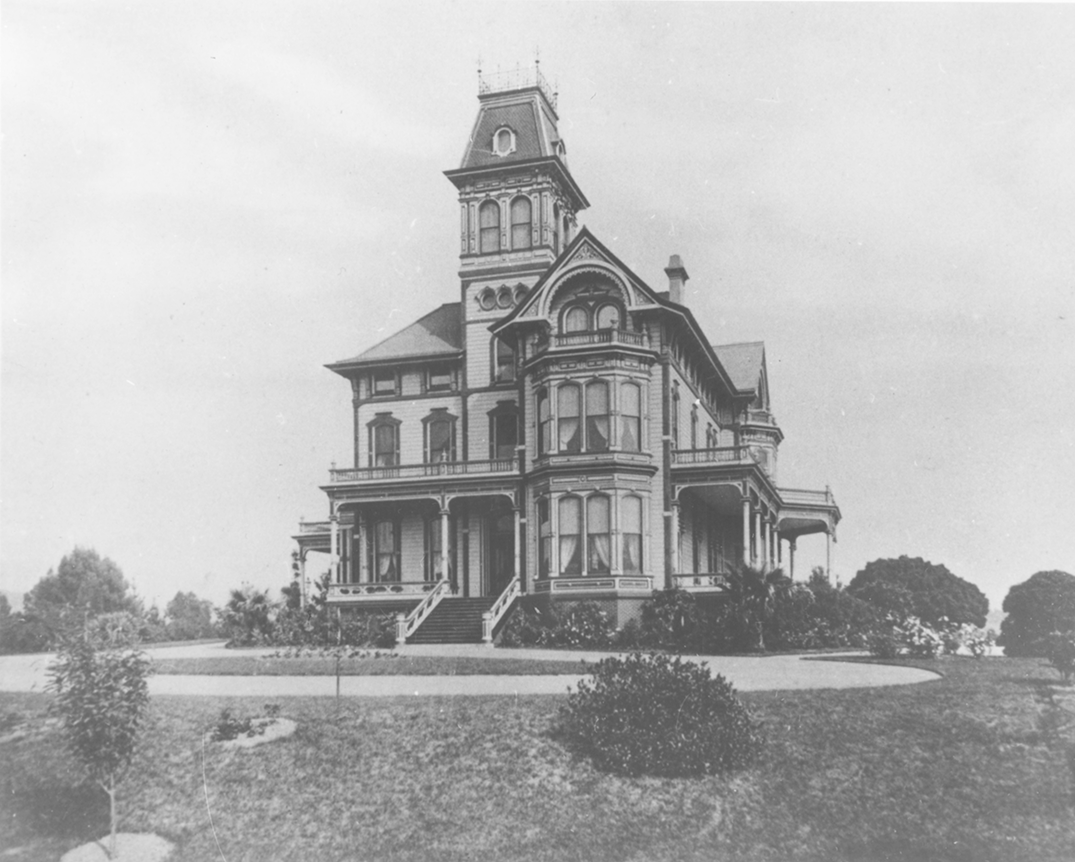
The Highlands, an 1876 Italianate mansion in Piedmont, California (from the Piedmont Historical Society’s website)
Written by Benjamin McGriff
As my family takes root within our new house on Piedmont Ridge, I have been surprised how quickly the place has felt like home. One of the reasons I feel such early grounding is the homes that make up Piedmont, California, had their architectural coming of age in the 1920s and 1930s mirroring that of my hometown Montgomery, Alabama. They were both peaking as cities at the same time which also happened to be the period of American history that most benefited from low cost, high skilled labor in home design and craft. Their shared appreciation of a stylistic eclecticism grounded in Western Europe resulted in a continuity of styles that prioritized the classical and timeless through lines of composition, scale and proportion. These homes are ambassadors of graciousness. They are generous to the families within, their friends and the communities to which they contribute. They are homes that are designed to nurture and inspire. They are spaces where a family can layer in their own narrative and deepen the meaning of that place.
Architect Albert Farr is criminally under-recognized for shaping the history of the East Bay hills. He is best known for work in SF, North Bay and broadly as a Bay Area architect, but his contributions to Piedmont stand above it all in long term impact. While working alongside other Bay Area architectural pillars like Julia Morgan and Willis Polk, Farr is the architectural godfather of Piedmont.
Similarly, Frank Lockwood, known mostly by name to those who lived within or enjoyed his spaces, was Montgomery, Alabama's original architectural great. His stylistic range, command of design principles and consistency of design quality make his homes feel like the premier touchstones of an age where all the necessary components of a great house construction were available and aligned.
I grew up in one of his houses, as did a few of my lucky friends and we were all graced by his legacy throughout our neighborhood. The geographical focus of his work was within the Cloverdale district. His most prolific style was the brick Tudor. A style that leans heavily into dramatic rooflines and texture heavy cladding. Evocative and elegant all around.
Design movements are the result of a confluence of factors creating favorable conditions where elevated outcomes can become common. I’m not sure we will see another alignment of fates that created these two communities. But I guess scarcity is what creates treasure and perhaps we just need to hold onto that.